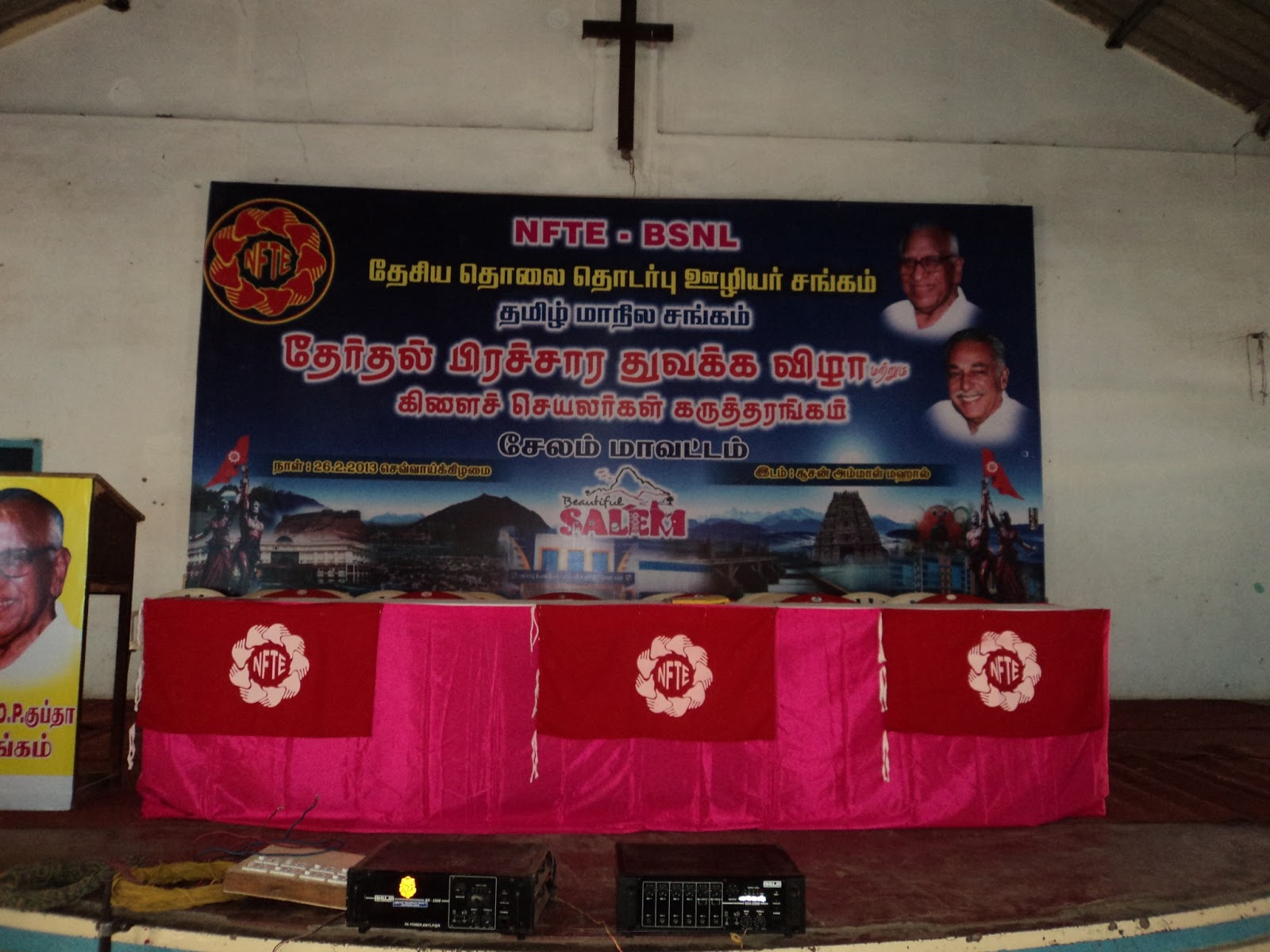
All-India strike hits financial sector,
transport
NEW DELHI/MUMBAI - India’s financial sector
was crippled and transport hit as large parts of the country ground to a halt
Wednesday in response to trade unions calling for a two-day strike to demand
concrete measures to check inflation, ensure jobs and enforce labour laws.
Day one of the nationwide protest saw trains
stopped in some places like Bihar and roads blocked elsewhere but it was all
mostly peaceful, with the exception of violence in Uttar Pradesh’s Noida and
Greater Noida areas, close to the national capital, where mobs attacked
factories and set fire to vehicles.
In Ambala, a Haryana Roadways employee was killed accidentally Wednesday when
he came under the wheels of a bus as authorities tried to forcibly ply
services. The banking sector was the worst hit in the strike called by
11 major trade unions including the ruling Congress’ Indian Trade Union
Congress (INTUC). The strike impacted normal life across wide swathes of India.
The charter of demands include concrete measures for containing inflation,
steps for employment generation, universal social security and making the
minimum wage Rs.10,000 per month along with daily allowance.
The protest, ahead of the budget session of parliament that is likely to see
Manmohan Singh government cornered by the opposition on a range of issues,
found wide resonance.
Around one million bankers struck work, affecting the clearance of around four
million cheques valued around Rs.250 billion (Rs.25,000 crore), estimated C.H.
Venkatachalam, general secretary of the All India Bank Employees Association
(AIBEA).
In India’s financial capital Mumbai, all banks, insurance companies and
commercial institutions remained shut, organisers said.
”The banking and financial sector is 100 percent closed not only in Mumbai and
Maharashtra but all over the country,” AIBEA vice president Vishwas Utagi told
IANS.
Attempts were made to halt buses in Mumbai and trains in the western suburbs
but police foiled most of these efforts.
Commuters had a tough time in the national capital with cabs and autos off the
roads, leaving them with no option but to either miss work or pack into metro
trains and buses. And that was how it was in many parts of the country.
The shutdown was pretty much total in Kerala, where the Left is not in power
but has significant influence, and in Left ruled Tripura.
Most markets, shops and business establishments, government offices,
educational institutions, banks and financial institutions were shut. Barring
private vehicles, public transport remained off roads.
”The price rise is unbearable. There has to be a way out,” said Kerala’s
Agricultural Minister K.P. Mohanan, who belongs to the ruling Congress party.
Life was disrupted elsewhere too. In India’s most populated state Uttar
Pradesh, 10,000-odd government-run buses stayed off the roads leaving commuters
stranded
And in West Bengal, where flight services were normal and trains plied despite
minor disruptions, buses, taxis and auto rickshaws largely kept off the roads.
Coal production and transportation were impacted in Jharkhand, Andhra Pradesh
and Chhattisgarh.
The strike also hit the Vishakapatnam Steel Plant in Andhra Pradesh.
In India’s tech hub and Karnataka capital Bangalore, software majors like
Infosys and Wipro worked normally but state-run Hindustan Aeronautics Ltd
(HAL), Bharat Electronics Ltd (BEL), Bharat Earth Movers Ltd (BEML), Indian
Telephones Industries (ITI) and Hindustan Machine Tools Ltd (HMT) shut down.
Normal life remained unaffected in most Karnataka towns.
Amongst the most affected were students. In Bihar, the government has postponed
the Class 12 examination scheduled for Feb 20 and 21 in view of the strike.
Officials said the exams will now be conducted in the first week of March. The
change in schedule will affect 800,000 students.
And while the strike organisers looked ahead at day two, analysts totted up the
losses.
According to industry body Assocham, which had Tuesday urged central trade
unions to withdraw the trike, the economy would lose Rs.15,000-20,000 crore due
to the disruption.
”The national economy, battling a slowdown, can ill-afford this situation”
Assocham president Rajkumar Dhoot said.